

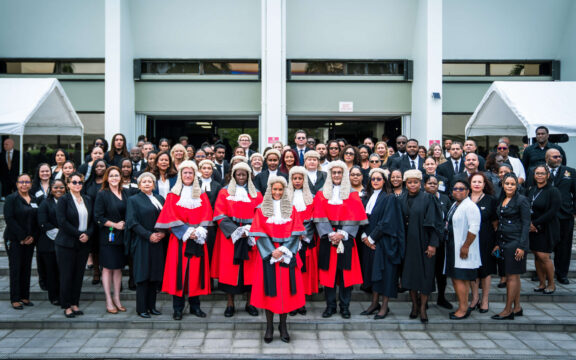



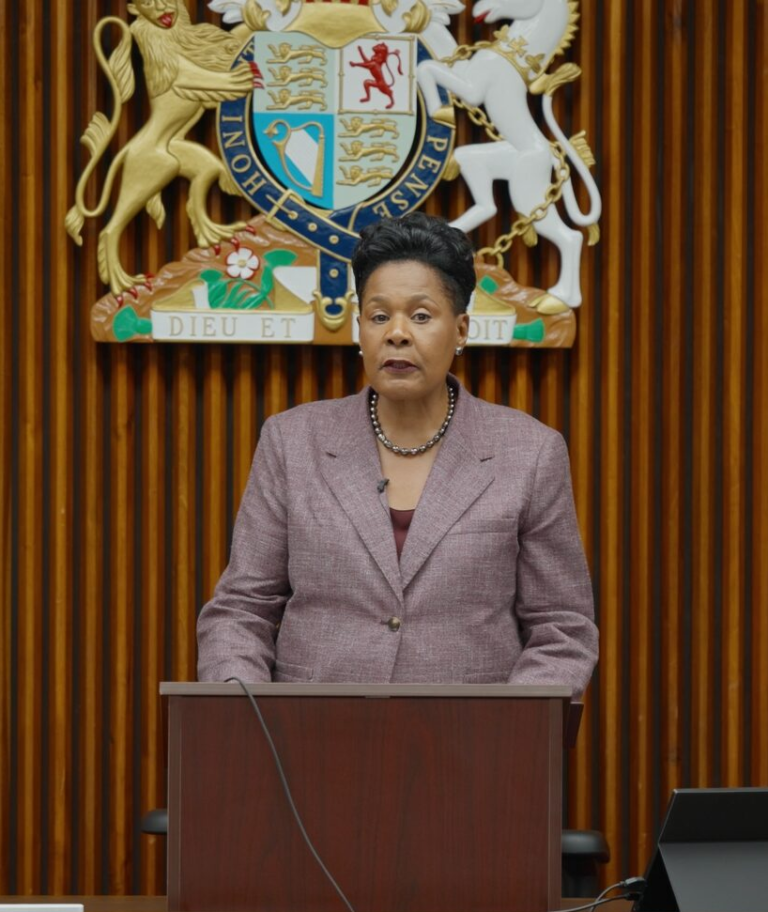
Her Excellency Paula-Mae Weekes, former President of Trinidad and Tobago and former judge of the Trinidad and Tobago and Turks and Caicos Islands judiciaries, delivered the Cayman Islands Judiciary’s 2026 Distinguished Guest Lecture on Monday, 28 September 2026.
Speaking to a varied cross-section of the legal profession, Her Excellency presented “When the Robes Come Off: Judicial Independence, Ethics and Accountability – A Cautionary Tale.” She was the first Caribbean jurist to contribute to the Judiciary’s Distinguished Guest Lecture Series.
Using recent events surrounding the Caribbean Court of Justice (CCJ) as a case study, Her Excellency examined broader questions of judicial independence, leadership, ethics and accountability. She made clear that the lecture was not intended to determine the truth or validity of allegations concerning the Court, but to use the circumstances as a springboard for considering issues relevant to judiciaries and the legal profession more broadly.
A central theme was that threats to judicial independence do not arise only from outside the judiciary. Her Excellency explored the more difficult questions that can arise when concerns emerge internally, including the relationship between judicial leadership and the independence of individual judges, the balance between decisive leadership and consultation, and the mechanisms available for raising and resolving concerns within a judiciary.
The lecture also examined the particular demands of judicial leadership. Her Excellency described the multiple roles required of a Chief Justice or President of a court, including administrator, colleague, institutional guardian, judge and public representative, and the tensions that can arise between autonomy and accountability, consultation and effective administration, and leadership and control.
Importantly, she connected effective judicial leadership with the need to support the people entrusted with those responsibilities. Her Excellency highlighted the value of formal leadership training, confidential therapeutic care and regular peer-to-peer forums, while drawing attention to the particular stresses experienced by judges and the importance of access to support that provides appropriate confidentiality and anonymity.
Those observations are particularly timely for the Cayman Islands Judiciary, where judicial well-being has been an important area of focus this year. In November, the Judiciary will co-host the International Judicial Conference on Integrity and Judicial Well-being, bringing together judicial officers and other participants to consider issues relating to judicial integrity and well-being. The conference forms part of the Judiciary’s continuing work to support a strong, resilient judiciary and the effective administration of justice.
Turning to ethics and accountability, Her Excellency emphasised the interrelationship between judicial independence, ethics and accountability and their importance to public confidence in the administration of justice. She considered the need for effective mechanisms to address internal concerns and misconduct, while preserving judicial independence, procedural fairness and the confidentiality necessary to judicial office. She further highlighted the importance of engagement between the Bench and the legal profession on issues extending beyond the day-to-day administration of cases to matters affecting judicial independence, accountability and the rule of law.
Concluding the lecture, Her Excellency encouraged judiciaries to look beyond the circumstances of the particular case study and examine their own institutional safeguards. Rather than asking only what may have gone wrong elsewhere, she challenged participants to consider whether their own institutions, leadership structures and ethical foundations are sufficiently robust to anticipate and address similar challenges.
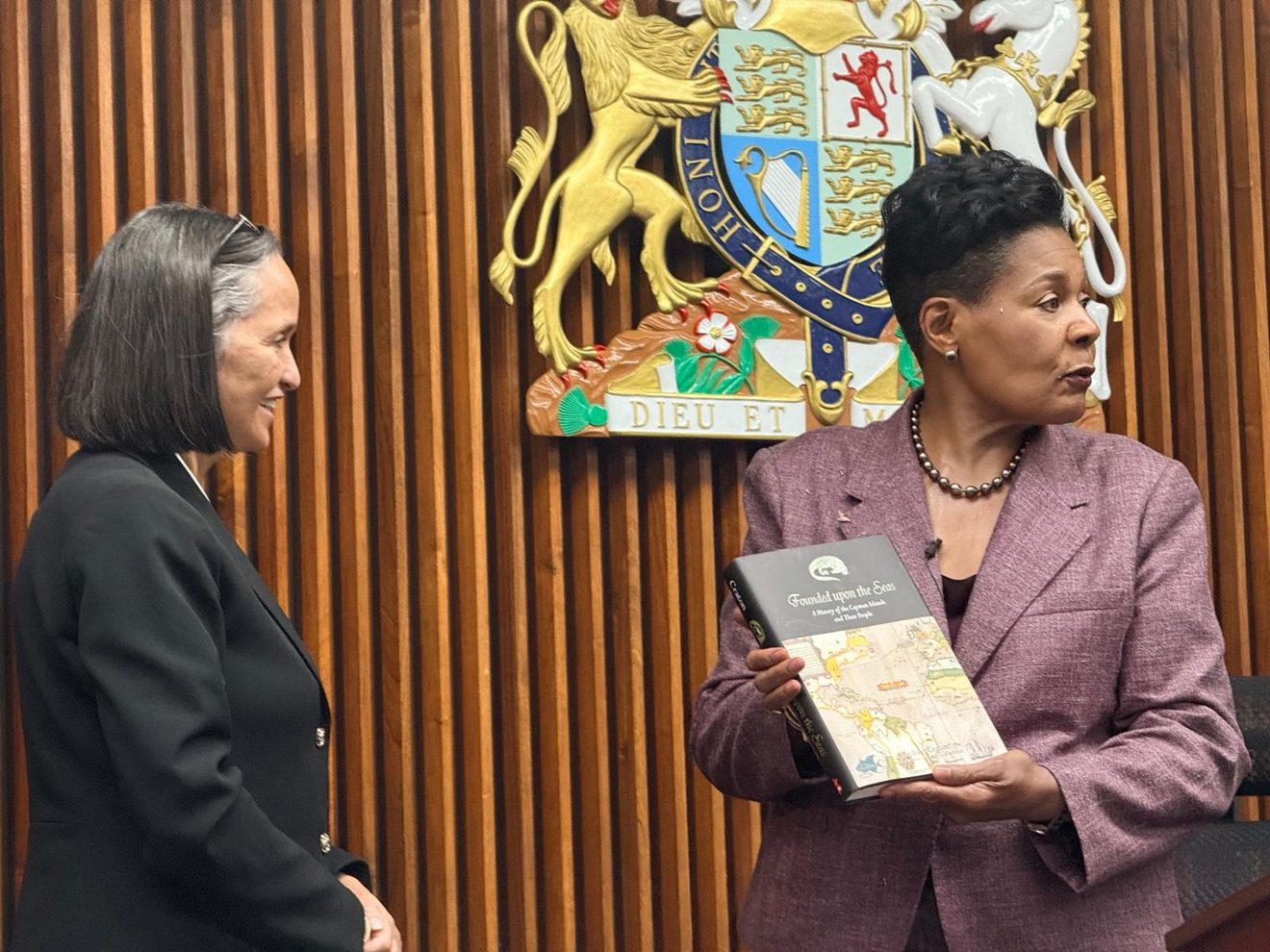
Following the lecture, Her Excellency was presented with a copy of Founded Upon the Seas: A History of the Cayman Islands and Their People, by Michael Craton and the Cayman Islands New History Committee. She welcomed the gift, noting that prior to her visit she had known little about the Cayman Islands and was pleased to have the opportunity to learn more about its history and people.
Her Excellency remained in the Cayman Islands following the Distinguished Guest Lecture to participate in the Judiciary’s Criminal Law Conference 2026, held from 29–30 September, continuing her engagement with members of the local legal and criminal justice community.
Stay Updated!
Subscribe to get our latest news and events right to your inbox.